


Bloomtacular
This is the part on Sprockets where we BLOOM!!

We’ve had some chills, thrills, and most recently a little heat wave, and by now just about everything is blooming. The coriander/cilantro is going exuberantly to seed, which helps the pollinators and gives me green coriander to put in the freezer, as well as dry coriander for seed and spicing. The ‘Celeste’ sweet peas have come back for the 3rd or 4th year of self-sown glory. I tried to plant some of the lovely pink ones I seed-saved from the community garden, but no dice: all blue this year.

Fortunately, this year’s new flower experiment, Clarkia, has come to the rescue with lots of eye-popping pink and magenta. These lovely flowers get really big and bushy, and while I scattered seeds of them in a number of places, I had to weed out some of the young clarkia that started crowding out other things. I had no idea what they’d look like, really, despite the pictures on the cover of the seed packet— thought they were MUCH smaller. But I think they’ll join the regulars in my yard, along with the old standbys of sweet peas, cornflowers, and nasturtiums.

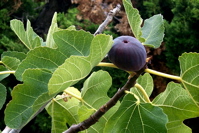
Speaking of cornflowers and nasturtiums, the side yard is doing very well. The nasturtiums, interestingly enough, seem to gradually self-select for one color, but it’s a different color in different parts of the yard. The ones along the side porch are almost always yellow. The ones by the fig tree by the driveway are gorgeously glowing orange and red. The scent of them at night is really stunning.

The cornflowers self-seeded nicely in the same planter that I had them in last year, but this year I turned the planter sideways so that we could get more easily into the side yard. I was delighted that the snapdragons that I’d bought as a large potted plant last summer were successful at scattering their seed— these lovely snaps came up on their own in the planter. I moved both of my carnations, one from a pot and the other from the ground, into the self-watering planter as well, and they’re now thriving. When the cornflowers are about ready to give up, it will be time for zinnias. Meanwhile, in the snapdragon/carnation planter, some of that profuse confusion (profusion!) of greenery you see are Pepperbox Poppies (Renee’s Seeds) that are getting ready to lift up their heads. The sharp-eyed will spot some in the side-bed of clarkia above as well.

These poppies are old-fashioned corn poppies, of the type we’d get for Memorial Day every year as a plastic buttoniere sold to support veterans. I’d never seen one as a real flower until these started blooming last week. I very much hope they establish themselves along the fence by the lavender, if they can compete well enough with the borage that takes over every spring. I had four-foot-tall borage out there in March, threatening to cover the lavender. I felt bad chopping it back, but put it in the compost pile to come back to the soil.


Moving along the driveway past the little storage sheds, we come to the runner beans. Last year the Painted Lady runner beans I put at the base of one of the carport supports really took off, winding up the post and along the plastic lattice shading we have along the top. In the mild zones 7 - 9 here, runner beans will build up a nice big root mass and establish as perennials— a great permaculture foundation to build on! While I just grow them for shell beans, I’ve read that you can eat them as snap beans, use the leaves and flowers in salads, and that even the root is edible. Wish I’d known that when I dug a humungous runner bean root out of one of my teeny 3x3 foot beds two years ago, because growing them there shaded the whole bed. I composted it!
Of course, snails LOVE them, and will demolish young runner bean seedlings. The shoots coming up from last year’s beans were eaten down to nubs several times, and I gave up and started new ones from seed— but when the latest round of warm weather came again, there were new shoots, so now I have a double batch going up the first support, as you can see in the picture. The thicker, dark green and fuzzy shoots are from the older root.
In the middle picture, you can see the Delicata squash vine that I planted at the base of some of the supports this year. I figured, what the heck, let’s see how this works. :-)


I’m not out of pictures by a long shot, but I’m out of oomph. Let’s close with the daylilies, thriving in the self-watering planter and clearly getting ready for a bumper crop of flowers this year. These were in regular planters last year, and never did very well, staying small. I realized they needed better moisture control than I could give them in those particular containers, so I moved half my planters from the back patio to along the side fence. The daylilies complement the neighbor’s lavender nicely. In one of the planters, I keep some space for annuals— cosmos last summer, and this spring I put in some vintage pastel stock and the lovely new ‘Sonnet’ pansies to match. They’ll go really well with the daylily colors, too. I had to pluck a LOT of snails out of that section of the planters in February and March to get those to survive, though. Apparently they’re not just an edible flower for people— slugs and snails love pansies. Just peeking up there in pink is a geranium that seeded on the ground from ones the previous neighbors had, and turned out to be JUST beyond the edge of the planters, so it got to stay.
Labels: backyard, beans, containers, flower, hydroponic, mybayareagarden, Untitled
posted by Strata Chalup @ 12:01 AM
1 comments


