
Wednesday, October 05, 2011

Dry Bean Harvest and Slow Cooker Beans

It's that time again-- all of my dry beans are now sitting in containers awaiting some quiet time to shell them. This year I was quite preoccupied in the summer, and only grew out two types of dry beans. I had scarlet runners on one of the driveway carport columns, that had returned on their own. I never got around to re-seeding the other carport columns, so unlike last year I have only about a quart worth to shell out.

In my community garden plot, I planted the back trellis heavily with true red cranberry beans. They were quite successful, and I expect to get a quart or so of them when they are all shelled.

Awareness of specialty heirloom beans has been growing, and you can easily try varieties from providers like Rancho Gordo or Phipps Country Store. Since heirloom beans don't hybridize trivially, you can save some when you cook the beans and plant them if you turn out to be very fond of that variety.

If rains threaten, remove pods from the plants, or pull the entire plant, and spread out or hang in a dry place, like a covered porch. Shell beans when the pods are dry and crackly, and beans are hard. If you can prick the skin on a shelled bean with a fingernail, it is not sufficiently dry-- spread those beans out in a single layer on a plate or a fine mesh screen and let dry for a week or two indoors, stirring and turning over daily.

I have read that large quantities of beans can be shelled out by putting in a pillowcase, tying the pillowcase closed tightly, and tumbling in a warm, not hot, clothes dryer, ideally with a couple of those spiked rubber balls used for fabric softening. I can see how this might work, but have never tried it myself-- if you have, please comment and let me know how it worked for you! In older days, folks used to put beans on a large cloth tarp at harvest festivals and someone would fiddle while folks danced, crushing the pods and threshing out the beans. Sounds very Louisa May Alcott, but YMMV and if you have a LOT of beans, get creative!

Slow-Cooker Beans

I make these almost every week for my hubby to take for lunch on workdays. I start with the basics, and add the variants. Takes just moments to set up on Sunday night, and is ready on Monday morning.

  • 3 cups dried beans
  • cover with water a little deeper than your index finger

Add any or all of the following veggies, subject to the room in your crockpot. It varies widely in flavor depending on the bean type and spicing type.

  • - chopped medium onion
  • - chopped 2 sticks celery
  • - 2 cloves peeled garlic
  • - 1/2 tsp whole mustard seed
  • - 1/2 tsp liquid smoke
  • - 1/2 - 1 tsp sea salt (to taste)
  • - 1 stalk kombucha dried seaweed
  • - 2 cups sliced mushrooms
  • - 2 cups diced squash (summer or winter squash)
Now add any "filling" you may want to use to bulk up the beans into a one-pot meal. Usually we omit the filling and just eat the beans over rice or crushed organic corn chips.
  • OR a cup of dry polenta meal
  • OR a cup of rice

Now the spices! First the jazz it up spices (even tho I am a spice-wuss compared to Mike)

  • - chunk of dried chili pepper (I favor passilas or turkish alma, which I grow)
  • OR 1 -2 tsps of smoked spanish paprika, ground ancho, mole mix, or passila pepper
Western Style
  • - quarter to half tsp of good Western bean herbs: savory, sage, basil, marjoram, oregano
India/Curry Style
  • - half tsp of good Indian bean herbs: cumin, paprika, whole clove, kaffir lime leaf, fresh turmeric if you have it, dried coriander
Asian Style
  • - half tsp of Asian bean herbs: lemongrass, cilantro, green coriander berry, tarragon, a whole anise, a few cloves

If the pot is not full within an inch of the top, add water until it is.

Cook on High for 4 hours or Low 8 hours or until beans are desired softness.

Add any lemon or lime juice (Asian, Indian) or tomato paste (half a can) ONLY AFTER beans are fully cooked, as acidity keeps them from softening.

A Few Tips and Tricks

My favorite dried beans to use are kidney, black, borlotti, cranberry, anasazi, and scarlet runner. Lots of the heirloom beans have been bred for specific cooking qualities, and it can be fun and tasty to experiment with them. Anasazi beans break down partially into a creamy slurry. Kidney beans stay whole but "make their own gravy". Good Mother Stallard and Hutterite Soup beans are a soup bean which dissolves like split peas do to make a thick soup. Etc. Rancho Gordo carries many classics, as does Bob's Red Mill.

If you garden, you can save dry beans to plant. They are not generally irradiated. Since beans do not tend to hybridize easily, they are likely to grow true to type if they are an heirloom variety.

Some boring day, make up some "packets" of bean spices (I use old prescription jars) so they are mixed and ready to toss into the cooker.

On busy weeks, I use the Trader Joe's or Whole Foods presliced veggies and have the batch going in about 10 minutes or less.

Root veggies don't seem to mix really well with slow cooker beans, at least to my taste. Have tried carrots, parsnips, beets, potatoes, in varying combinations. Overall result was not really appreciated by myself or my spouse.

Don't use brassicas as veggies, either (cauliflower, broccoli, cabbage, etc). Kale sometimes works, but the cruciform veggies and cabbage tend to get sulfur tasting with long slow cooking in liquid. If you really want them in there, roast them in the oven and add them after the beans are cooked.

Labels: , ,

Tuesday, May 19, 2009

Bloomtacular

This is the part on Sprockets where we BLOOM!!


FlowerTime-Coriander-Mustard-Clarkia-Sweet_Peas.jpg


We’ve had some chills, thrills, and most recently a little heat wave, and by now just about everything is blooming. The coriander/cilantro is going exuberantly to seed, which helps the pollinators and gives me green coriander to put in the freezer, as well as dry coriander for seed and spicing. The ‘Celeste’ sweet peas have come back for the 3rd or 4th year of self-sown glory. I tried to plant some of the lovely pink ones I seed-saved from the community garden, but no dice: all blue this year.


Clarkia-and-Poppies.jpg


Fortunately, this year’s new flower experiment, Clarkia, has come to the rescue with lots of eye-popping pink and magenta. These lovely flowers get really big and bushy, and while I scattered seeds of them in a number of places, I had to weed out some of the young clarkia that started crowding out other things. I had no idea what they’d look like, really, despite the pictures on the cover of the seed packet— thought they were MUCH smaller. But I think they’ll join the regulars in my yard, along with the old standbys of sweet peas, cornflowers, and nasturtiums.


Side-Yard-Nasturtiums-5th-gen-self-seeded.jpg


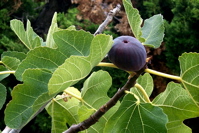
Speaking of cornflowers and nasturtiums, the side yard is doing very well. The nasturtiums, interestingly enough, seem to gradually self-select for one color, but it’s a different color in different parts of the yard. The ones along the side porch are almost always yellow. The ones by the fig tree by the driveway are gorgeously glowing orange and red. The scent of them at night is really stunning.


   Side-Yard-Planters.jpg


The cornflowers self-seeded nicely in the same planter that I had them in last year, but this year I turned the planter sideways so that we could get more easily into the side yard. I was delighted that the snapdragons that I’d bought as a large potted plant last summer were successful at scattering their seed— these lovely snaps came up on their own in the planter. I moved both of my carnations, one from a pot and the other from the ground, into the self-watering planter as well, and they’re now thriving. When the cornflowers are about ready to give up, it will be time for zinnias. Meanwhile, in the snapdragon/carnation planter, some of that profuse confusion (profusion!) of greenery you see are Pepperbox Poppies (Renee’s Seeds) that are getting ready to lift up their heads. The sharp-eyed will spot some in the side-bed of clarkia above as well.


Corn Poppies 1st year from seed.jpg


These poppies are old-fashioned corn poppies, of the type we’d get for Memorial Day every year as a plastic buttoniere sold to support veterans. I’d never seen one as a real flower until these started blooming last week. I very much hope they establish themselves along the fence by the lavender, if they can compete well enough with the borage that takes over every spring. I had four-foot-tall borage out there in March, threatening to cover the lavender. I felt bad chopping it back, but put it in the compost pile to come back to the soil.


Carport-Beans-Painted-Lady-n-Scarlet-Runner.jpg Carport-Scarlet-Runners-1.jpg Carport-Scarlet-Runners-2.jpg


Moving along the driveway past the little storage sheds, we come to the runner beans. Last year the Painted Lady runner beans I put at the base of one of the carport supports really took off, winding up the post and along the plastic lattice shading we have along the top. In the mild zones 7 - 9 here, runner beans will build up a nice big root mass and establish as perennials— a great permaculture foundation to build on! While I just grow them for shell beans, I’ve read that you can eat them as snap beans, use the leaves and flowers in salads, and that even the root is edible. Wish I’d known that when I dug a humungous runner bean root out of one of my teeny 3x3 foot beds two years ago, because growing them there shaded the whole bed. I composted it!


Of course, snails LOVE them, and will demolish young runner bean seedlings. The shoots coming up from last year’s beans were eaten down to nubs several times, and I gave up and started new ones from seed— but when the latest round of warm weather came again, there were new shoots, so now I have a double batch going up the first support, as you can see in the picture. The thicker, dark green and fuzzy shoots are from the older root.


In the middle picture, you can see the Delicata squash vine that I planted at the base of some of the supports this year. I figured, what the heck, let’s see how this works. :-)


Daylilies Gearing Up for Summer.jpg Old-fashioned-stock-and-pansy-mix.jpg


I’m not out of pictures by a long shot, but I’m out of oomph. Let’s close with the daylilies, thriving in the self-watering planter and clearly getting ready for a bumper crop of flowers this year. These were in regular planters last year, and never did very well, staying small. I realized they needed better moisture control than I could give them in those particular containers, so I moved half my planters from the back patio to along the side fence. The daylilies complement the neighbor’s lavender nicely. In one of the planters, I keep some space for annuals— cosmos last summer, and this spring I put in some vintage pastel stock and the lovely new ‘Sonnet’ pansies to match. They’ll go really well with the daylily colors, too. I had to pluck a LOT of snails out of that section of the planters in February and March to get those to survive, though. Apparently they’re not just an edible flower for people— slugs and snails love pansies. Just peeking up there in pink is a geranium that seeded on the ground from ones the previous neighbors had, and turned out to be JUST beyond the edge of the planters, so it got to stay.


Labels: , , , , , ,

Sunday, November 25, 2007

Garden Desktop: Full of Beans!

This week's Garden Desktop doesn't amount to a hill of beans. Well, actually, wait, it DOES. Several hills, in fact!


This past weekend I finally shucked the beans I had drying on a table out on our porch. There are big white and brown Painted Lady beans from the side yard. These did so well, and are so delicious, that I will grow them on ALL the carport pillars next year, rather than on just one. The hummingbirds love the half-white, half-red flowers, too.


The big pink/red and brown beans are Scarlet Runner beans, whose all-red flowers are so popular with the hummies that they fight over them! They are wonderful to create a shady arch or temporary patio cover. I've been thinking of pulling up a couple of the foot-square pavers on our back patio and planting Scarlet Runners there on arches, to make a little afternoon nap nook. I have to figure out first if it will shade the veggie garden beds, though. I don't want that!


The smaller rounder beans are the heirloom that I call Monte's Italian, the nth generation of those given to us by our photographer and diver friend Monte Smith. They hybridize readily, so this year we tried to be careful about growing them away from the other beans. Even so, we got a few crosses with the Scarlet Runners, as shown by some of the pink rounded beans, and possibly with the Painted Lady as well-- the beans are usually a creamy tan color with one to three small dark-brown streaks, and some of them are suspiciously paler, and more similar to the Painted Lady beans in color.


Last year's bean drying, didn't take a pic of this year's.

I saved bean seed earlier in the year, and made sure to save from long, well-formed, plump pods with a minimum of 5 beans per pod. I was usually able to save 2 or 3 seeds of a 6 or 7 pod bean. Last year I just shelled them all and picked out the plumpest beans, and then realized "doh!", I was only selecting for part of the story!

As always, feel free to use and share this Garden Desktop. It's okay to link and publish with a link back and/or attribution, and to use in print for personal or nonprofit use. There's a 1280 x 960 version for larger desktops too.

Labels: , ,

Friday, August 24, 2007

Harvest Snapshot: Aug 24


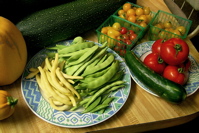
Garden volunteers make up a nice part of this harvest. The colander of yellow cherry tomatoes comes from self-seeded plants along our side yard. We moved some dirt around last fall, and apparently it had some tomato seeds in it. The pak choi was a straggler from a planter that had been harvested previously and was dumped in the side yard to help build up the soil layer there. I was very surprised to see it during the hot-weather season, but suspect its location in the fence shade is why it survived so well.


Zucchini and beans continue in mass quantities, often going straight into the freezer or the saute pan from the garden.

Labels: , ,